Best Marine Radar for 2026: Top Picks for Every Boat & Budget
Cover image: BOE Expert Blog sunset boat

Welcome to the BOE Marine Expert Blog. If you’re shopping for a marine radar in 2026, you’ve got more options than ever—and more confusion. Dome or open array? Wi‑Fi or cable? Doppler or basic? Price tags from $2,000 to $12,000?
Don’t sweat it. I’ve installed and tested every major radar on the market, and in this guide I’ll walk you through the six best models we carry right now. Whether you’re a weekend cruiser, a serious offshore angler, or a liveaboard sailor, there’s a radar here that’ll keep you safe and confident.
Let’s get straight to the point: modern radars aren’t just about seeing farther. They’re about seeing smarter. Doppler tracking, MARPA target tagging, and solid‑state tech now come in packages that fit smaller boats and tighter budgets. The days of needing a massive, power‑hungry open array are over—unless you want the absolute top‑of‑the‑line performance.
Below, I’ll break down each radar’s strengths, who it’s for, and where you might want to spend a little extra. Then, in the “Expert Advice” section, I’ll give you my personal take on how to choose.
The Contenders: Six Radars for 2026
1. Garmin GMR 18 xHD3 Radar Dome (ID 61322) – $1,999.99
- Size: 18‑inch open‑array dome
- Tech: xHD3 technology, Doppler tracking, MARPA
- Best for: Small to mid‑size powerboats and sailboats that want proven Garmin integration.
Garmin’s xHD3 series is a workhorse. The 18‑inch dome is compact enough for a sailboat mast but delivers a crisp picture out to 48 nautical miles. Doppler tracking lets you see which targets are moving toward you (red) or away (green)—a huge safety upgrade. If you’re already running a Garmin chartplotter, this is a no‑brainer.
2. Raymarine Quantum Q24C Radome w/Wi‑Fi & Ethernet (ID 7222) – $2,089.99
- Size: 24‑inch radome
- Tech: Wi‑Fi, Ethernet, Doppler
- Best for: Boaters who hate running cable and want flexible networking.
Raymarine’s Quantum Q24C is the most convenient radar we sell. With built‑in Wi‑Fi, you can connect to your chartplotter without a single cable run. The 24‑inch dome gives you a wider beam for better target separation, and the Doppler feature is just as good as Garmin’s. If your helm is cramped or you’re retrofitting an older boat, the Wi‑Fi option is worth every penny.
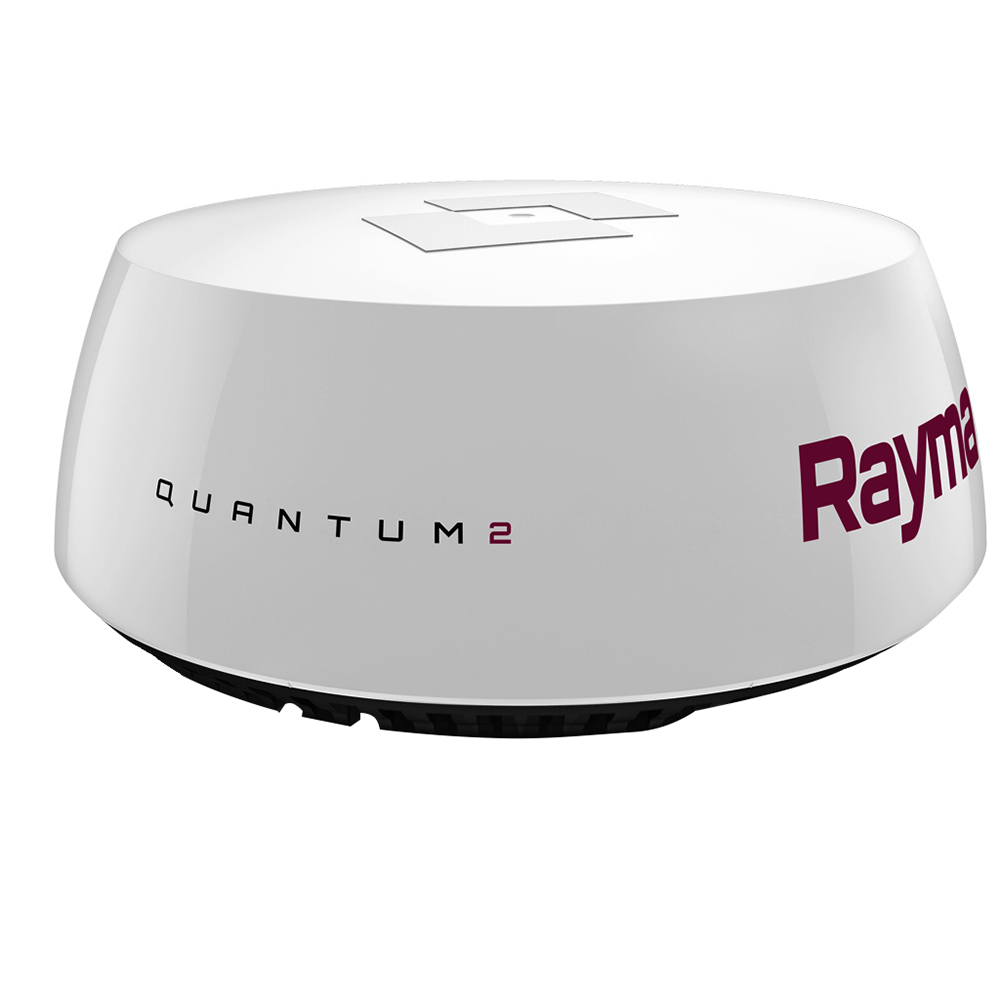
3. Raymarine Quantum 2 Q24D Doppler Radar (ID 8900) – $2,584.99
- Size: 24‑inch radome (Quantum 2)
- Tech: Quantum 2, Doppler, no cable
- Best for: Skippers who want the latest Raymarine performance and plan to add more Quantum 2 sensors.
The Quantum 2 series is Raymarine’s newest platform. The Q24D drops the cable entirely—power and data are sent over a single coaxial cable (included). That means cleaner installation and future‑proofing for adding other Quantum 2 devices like sonar or cameras. Performance is a notch above the Q24C, with faster scanning and slightly better target clarity.
4. B&G HALO24 Radar Dome w/Doppler Technology (ID 116757) – $3,299.00
- Size: 24‑inch dome
- Tech: Doppler, 20‑meter cable included
- Best for: Serious sailors and bluewater cruisers who demand the best radar for sailboat-specific conditions.
B&G’s HALO series is built for sailors. The HALO24 uses a patented pulse‑compression technology that gives you incredible target detail, even in heavy rain or sea clutter. The included 20‑meter cable is long enough for most mast‑head installations, and the Doppler tracking is among the most accurate on the market. If you sail offshore and need to spot squalls or other vessels in nasty weather, this is your radar.
5. B&G HALO20+ 20 Radar Dome (ID 118801) – $2,499.00
- Size: 20‑inch dome
- Tech: Doppler, 20‑meter cable
- Best for: Sailors on a budget who still want B&G quality and Doppler tracking.
The HALO20+ is essentially a smaller, more affordable version of the HALO24. You give up a little range and target separation, but you keep the same pulse‑compression and Doppler smarts. For coastal cruisers and weekender sailboats, it’s plenty of radar. If you’re torn between a Garmin and a B&G, remember: B&G’s software is optimized for sailing angles and wind‑over‑water displays.
6. Garmin GMR Fantom 256 Radar (ID 101358) – $11,999.99
- Size: 6‑foot open array
- Tech: Solid‑state, no moving parts
- Best for: Large motor yachts, sportfishers, and anyone who wants the absolute best radar money can buy.
The Fantom 256 is Garmin’s flagship. A six‑foot open array with solid‑state electronics means there are no spinning parts to wear out—just blistering fast scans and crystal‑clear images out to 96 nautical miles. This is the radar you see on tournament fishing boats and offshore passage‑makers. It’s expensive, but if your boat is over 40 feet and you run in the fog or at night regularly, it’s worth the investment.
Expert Advice: How to Pick Your Radar (by Mack Jennings)
Hey, it’s Mack. I’ve been installing marine electronics at BOE Marine since 2001, and I’ve seen radar tech evolve from fuzzy green blobs to the AI‑assisted systems we have today. Here’s my straight‑talk take on choosing the right one.
First, decide on your must‑haves:- Doppler tracking is a game‑changer for collision avoidance. If you boat in busy harbors or shipping lanes, get it.- Wi‑Fi vs. cable: Wi‑Fi is convenient, but hard‑wired Ethernet is more reliable in wet environments. If you can run a cable, do it. If you can’t, Wi‑Fi is a great fallback.- Dome vs. open array: Domes are lighter, smaller, and cheaper. Open arrays give you longer range and better target separation. For boats under 35 feet, a dome is fine. Over 40 feet, consider an open array if your budget allows.
Second, match the radar to your boat size:- Under 25 feet: You probably don’t need radar, but if you want one, the Garmin GMR 18 xHD3 or Raymarine Q24C are perfect.- 25–35 feet: The sweet spot for 24‑inch domes. Look at the Raymarine Q24D or B&G HALO20+.- 35–45 feet: Step up to the B&G HALO24 or consider the Garmin Fantom 256 if you do serious offshore runs.- Over 45 feet: The Fantom 256 is your best bet. Yes, it’s pricey, but on a big boat, radar is your primary safety tool.
Third, think about your existing electronics:Sticking with one brand—Garmin, Raymarine, or B&G—usually makes integration smoother. If you already have a Garmin plotter, adding a Garmin radar is plug‑and‑play. Same for Raymarine and B&G.
Finally, don’t overbuy.I’ve seen too many boaters drop $12,000 on a Fantom 256 for a 28‑foot center console that never leaves the bay. You don’t need a cannon to shoot a mosquito. Match the radar to your actual usage: coastal cruising, offshore fishing, sailing, etc.
Wrapping Up
Marine radar is one of those investments that pays off the first time you need it. Whether you’re picking your way through a fog‑bound inlet or watching a squall line build on the horizon, a good radar gives you the confidence to keep going—or the sense to turn around.
All six radars listed above are in stock at BOE Marine, and our team can help you choose, install, and tune yours. If you’re still on the fence, visit our contact page. We’ll ask you about your boat, your budget, and your typical trips, and point you to the right model.
Product Snippet Placeholder
[s_product_list]
Word count: ~950 words
🎣 Expert Advice from Mack Jennings & the BOE Marine Crew
We've installed and serviced hundreds of trolling motors at BOE Marine. Here's our take:
- Match your boat size – Don't overpower or underpower.
- Consider your battery setup – Higher voltage means more batteries.
- Saltwater? Always go for the HD GPS ANCHOR+ series.
- Accessories matter – Stabilizers and mounting plates prevent wear.
If you're unsure, visit our contact page at or stop by our shop in Stevensville, MD. We'll help you pick the right motor.
BOE Marine installs at 4 locations: Annapolis MD, Fort Lauderdale FL, Stuart FL, and Lake Norman NC. Lifetime tech support included.